Like music, art isn't supposed to have one set meaning, in fact, I don't always know the intention behind my own drawings. The meaning by art lies in the Pathos created by the experiences of the viewer. It takes their own memories and experiences and instills emotions inside themselves to create meaning.
For example, here is a drawing I did two weeks ago

The image of a bleeding hand holding a rose obviously will act as a metaphor for some moment in a person's life. It could be a moment in which romance brought them pain, or even just if they pricked their finger on an actual rose. This makes art a pathway to rhetoric.
Art also uses Ehtos as well. Have you ever seen a piece of art that looks simple and unremarkable, but is revered and worth lots of money. Chances are, that piece is by an artist who is famous in the art community. Artists with the respect of their peers can make whatever they wish, and the masses will almost always love their work.
For example, Andy Warhol created a number of pieces of art, such as a drawing of a Campbell's Soup can, and an artistic film about a man receiving a blow job (Literally, the film is called Blow Job, and showcases a man's face as he receives fellatio). These pieces are not in themselves remarkable in any way, but because they are Warhol works, they are regarded as artistic masterpiece.
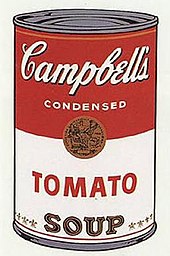 |
| Warhol Soup Can |
Art also facilitates rhetoric through discussion of the art as well. The word choices people use to describe their interpretations of art are all choices of rhetoric that help convey their feelings created by the Pathos enabled by their art. In fact, art is general can be argued to be purely rhetorical in nature.

Dude, that drawing's great, man. I don't think of at as rhetoric, but I've definitely started thinking about it thanks to this post. Thanks, Matt.
ReplyDeleteHm, that's a really interesting way to view art. I'm an art history major, so I spend quite a bit of my time having to analyze different works. I wouldn't necessarily say that art is respected by "famous" artists garners attention just because of the artist. In fact, Warhol's film Blow Job caused a lot of controversy and has been highly critiqued and often looked at as disgracefully pornography--not art.
ReplyDeleteThe Campbell Soup can is often looked at as a commentary of society and the method of print making Warhol used also draws into why people consider it to be an important work in our time.
I think the great thing about art though is that fact that it is so volatile in the ways that people talk about it, and no matter how old it is, there's always speculation. Great post! (And apologies for this rant of sorts...)
Ooooh... we're headed into discussions about visual rhetoric soon, so this is a great lead-in post!
ReplyDelete