Monday, April 30, 2012

Matt Robida's E-Portfolio


I’m currently an undergraduate student majoring in Crime, Law, and Justice (BA) at Penn State University. As an aspiring Paterno Fellow I often find myself in the library for long enough periods of time to be able to call it my home away from home. As I progress through my education, I hope to attend law school and earn a JD, focusing on either criminal law or constitutional law.

In my desired profession, rhetoric is very prevalent, and it is extremely important to understand what rhetoric is and how to use it. Through the education I have received so far, I have discovered that rhetoric is used for much more than the stereotypical explanations of it. Normally, people think of rhetoric as an underhanded technique used in politics to gain the upper hand. However, through my education, I have come to understand that rhetoric is constantly being used, whether we realize it or not.

Every action a person makes has rhetorical aspects to it, whether it be the timing of the action, known as kairos, or someone listening to a respected person, known as ethos.  While we all are using rhetoric, it is important to utilize it, as utilization can result in a greater ethos, which in turn, can help influence others, which is the basis of rhetorical choices.

Once one gains the ability to understand rhetoric will allow that person to understand why others use rhetorical choices. Being able to file through all the rhetoric in the world and discover what is beneficial is extremely important, and can help a person progress in their endeavors.

As a law student, learning the effective use of rhetoric has been one of the most important lessons from my education thus far. Having the ability to utilize such a powerful tool will be extremely beneficial, and eventually, I believe it will make me a better lawyer.

On this site, you will find several of my own essays, which examine the use of rhetoric in different mediums throughout society. In each case, numerous rhetorical choices were used, both by the subjects of the work, as well as by me, the author. Through these, I hope to both demonstrate my own understanding of rhetoric, as well as provide examples for those wishing to gain a better understanding.


Friday, April 6, 2012

It's Halftime, America

On Tuesday, GOP frontrunner Mitt Romney dominated the Republican primaries, sweeping the primaries in Wisconsin, Maryland, and Washington DC. This is practically a death blow to the Santorum campaign, and pretty much everybody is aware.


Everyone, that is, except Rick Santorum.

In a speech after the primaries, Santorum stated, "It's halftime" and that he was ready to "storm out of the locker room" for the second half. To further accentuate his claims, Santorum appealed to the Ethos of the Republican god, Ronald Reagan.

Santorum recalled the fact that in 1976, Reagan hadn't won a single primary until May, and was able to take the race all the way to the GOP national convention, where he eventually lost. This, he claims, resulted in a loss in the general election.


Of course, the logos Santorum's argument is inherently flawed, as comparing himself to Reagan in '76 is basically saying he is going to divide the party and help Obama win the general election.

Though, Santorum did go on to say that in 1980, the GOP finally nominated Reagan, and he eventually won the general election. He continued, saying it was a mistake in 1976 to not elect Reagan, and it would be a mistake to wait until 2016 to elect Santorum.

Santorum actually believes that he is going to win the nomination, and will continue fighting until the end. This will likely create further parity inside the GOP, and could hurt Romney's chances at election. This reveals that Santorum's logos in regards to the whole election process is completely flawed, and by doing this, he is actually helping President Obama closer to victory.

Thursday, March 29, 2012

Mitt Romney screws up again... sigh...

Ok, now it's starting to get old. At first, I liked watching the Republican candidates say a bunch of completely nonsensical things as much as the next guy. It seriously was some of the most entertaining television for several months. Unfortunately, it's starting to get old.

This past week alone, Rick Santorum lost his cool when he was asked whether he said Mitt Romney was the worst republican in the country (he kinda did),  and both Santorum and Gingrich (once again) completely misinterpreted President Obama's words calling for solidarity in the wake of the Trayvon Martin shooting.
http://live.drjays.com/index.php/2012/03/27/rick-santorum-loses-temper-calls-nyt-reporters-question-bullshit/
However, the most publicized gaffe came when, during a national interview, Romney's adviser Eric Ferhnstrom compared the Romney campaign to an etch-a-sketch, in that "you can kinda shake it up and restart all over again."

Opponents of Romney quickly took to the offensive, claiming that this proved that Romney didn't really care about the issues, and would say anything to win. Quite frankly, given Romney's past statements, his opponents are correct.

The reveal of these details severely hurts Romney's ethos, as he will not portray the idea of an ethical, moral president, but rather a person who will stop at nothing to gain power, even if it means lying to the people.

At this point in time though, it appears that these comments will not affect the outcome of the republican primary, as Rick Santorum must win 70% of the remaining primaries to win the nomination. Astonishingly, this could even be considered good kairos. While the statement was ill-advised, it could have come earlier in the race, and destroyed Romney's campaign. However, since the comment was made so late in the process, it doesn't look like Romeny will be affected.

But this whole etch-a-sketch thing isn't all bad. In fact, there is now a fun new website, etchasketchmittromney.com, in which one can see numerous Romney flip-flops on an etch-a-sketch.
And, etch-a-sketch sales have risen 3000% since the comment was made. Romney inadvertently helped out the economy!

Seriously though, it's getting frustrating listening to these guys. Of course, funny Rick Santorum photos never get old.

Thursday, March 22, 2012

Fighting Rick Santorum


Today, I'm going to continue riding on the Rick Santorum bandwagon. No, I'm not talking about being a Rick Santorum supporter, I'm talking about blogging about him at his expense. And today, I'm gonna push the boundaries about as far as they can go, and it is all completely justifiable!

Recently, as many of you know, Rick Santorum has taken some very conservative stances on the issues... Especially those issues involving gay marriage and pornography. In fact, before Santorum's run for president even began, he was already making stupid comments that caused major controversy.

Back in 2003, Santorum stated in an AP interview that "In every society, the definition of marriage has not ever to my knowledge included homosexuality. That's not to pick on homosexuality. It's not, you know, man on child, man on dog, or whatever the case may be. It is one thing."

Now, Santorum claims that he was saying that homosexual sex was not beastiality, but others are skeptical, arguing that if that were true, he'd never had brought up "man on dog" in the first place. After Santorum defended himself, the tension boiled over, and journalist Dan Savage decided it was time to act.

By acting, I mean Savage created a new definition of the word Santorum on the website spreadingsantorum.com, and began an internet campaign to make it the first thing that comes up on a google search of the word. His plan was successful, and now the name Santorum will forever be associated with-- No, I'm not going to post the definition on here. If you don't already know what santorum now means, and you really want to know, just look it up on Google. Just be prepared to be thoroughly disgusted.

More recently, Santorum has attacked the pornography industry, claiming that it is dangerous to American morals, and is causing violence to spread. Beside the fact that he is wrong, Santorum has kinda annoyed the male community (I'm sure other groups are annoyed too, but men were the first people to come to mind). Of course, these comments once again made Santorum look dumber and dumber. Seriously, why would someone ever put eliminating pornography as a major concern, while there is so much wrong with our country?

In response to this, internet users decided to make some rather clever images. The first, as seen above, is a portrait of Rick Santorum made completely out of gay pornography (it becomes borderline NSFW if you enlarge it). The second, seen below, is a bunch of small images of Rick Santorum, forming the image of gay pornography.

Rick Santorum
Not only is this trend of utilizing Rick Santorum's hatred for/obsession with homosexuality and pornography to create jokes hilarious, but it also has utilized kairos and ehtos in attempts to derail his campaign.

The timing of these attacks on Santorum have come at the perfect time, right during presidential election season, when the eyes of America are locked upon Santorum. Now, if a potential voter who knows nothing about Santorum looks him up online, they will be shocked, and the word Santorum will evoke images they'd rather not think about, and could even decide to not vote for him (which is the goal). And the pictures do the same thing, as Rick Santorum and gay porn are forever linked.

The plan is that by linking the two, opposition of Santorum hopes that Santorum's ethos will drop due to a lack of credibility. Obviously, they hope that internet users won't pay enough attention to notice that these definitions and images are meant to make him look bad. In fact, this is just normal political mudslinging that voters see every single election season. Campaign ads do exactly the same thing, by questioning superficial characteristics of opposing candidates in order to lower their ethos.

I personally hope Santorum stays in this race all the way until the Republican National Convention, where  he will inevitably lose to Mitt Romney. My reasoning isn't that Santorum is a good candidate, in fact he is very far from being a god candidate. My reasoning is that Rick Santorum has been extremely entertaining, and the comedy world will never be quite the same once he is out of the picture... Well, that is until 2016 when he will likely run for office again. It's just like the Olympics, except way funnier.

Oh well, for now I will just have to cherish these last few months of hilarious Santorum-related comedy bits while they last.

Friday, March 16, 2012

The "Logic" of Grover Norquist

On Monday, Grover Norquist, the president of Americans for Tax Reform, appeared on the Daily Show to discuss his stance on the issue of Tax Reform.


On the show, Norquist took an absolutist approach to spending, claiming that "taxes should never be raised" and instead should be replaced by lowering spending by Congress. The problem with this is that Norquist refuses to see any other options. This was mostly highlighted when he claimed that the 2010 elections, which he claims were "an election won against spending." This is a major problem with Norquist and many of the anti-tax Republicans; they refuse to look at anything on a wide scope, and demand to get what they want, even if they don't even know the whole picture.

Shortly after Norquist's remark, host Jon Stewart noted that the election was won on "both [spending and taxes] and a few other things." This two second answer completely reveals the problem with politics in general; people are unwilling to to acknowledge a grey area, and have turned politics into a right vs. wrong mentality.

I also found it interesting how Norquist explained the fact that America faced a deficit with the previous three republican presidents, and a surplus under Clinton. To counter this, he claimed that lower taxes actually helped boost America's revenue before Clinton, but it went into effect while he was in office, but his policies caused the economy to once again fall apart when Bush took over.

Now, you could easily say that his opinion matters in the argument, but to me, he's just completely ignorant to how the economy actually works, and refuses to acknowledge the facts. The fact he runs a PAC that has such strong control over the republican party is a major threat to the sanctity of our government as a whole.


To see Norquist on the Daily Show, click here

Friday, March 2, 2012

The "Silence Gun"


Recently, I read an article about a new "gun" that could be used to stop people from being able to talk. The gun uses microphones and speakers to capture and replay a person's voice directly after they speak. When the brain attempts to process the two voices in such close proximity (in time), it becomes confused, making it nearly impossible for a person to speak properly.

Right away, this brought my mind to the dangers of this technology on the rhetorical abilities of Americans. This "weapon" could easily be used to suppress someone's right to free speech. For example, if a person is protesting, how hard would it be for an opponent to aim this "gun" at them and force them to be quiet. Basically, this technology is able to suppress a person's ability to convey their ideas and beliefs.

In doing so, one coud eliminate the original view of debate and rhetoric. Ideas and opinions were exceptionally important to ancient thinkers. However, now, if a person holds a viewpoint against the government, then the government could point the gun at the protester and shut them up (if they have the gun). If someone can do that, then they aren't respecting the opinions of others, and are therefore going against the basic nature of rhetoric and debate.

Thursday, February 23, 2012

Rhetoric of art

I enjoy drawing. It's not only an activity that passes the time, it's an activity that allows me to express myself in positive ways. In my dorm room I have a bulletin board covered in drawings I have done in my free time. However, the one thing that annoys me is when people ask me what my work means.

Like music, art isn't supposed to have one set meaning, in fact, I don't always know the intention behind my own drawings. The meaning by art lies in the Pathos created by the experiences of the viewer. It takes their own memories and experiences and instills emotions inside themselves to create meaning. 

For example, here is a drawing I did two weeks ago

The image of a bleeding hand holding a rose obviously will act as a metaphor for some moment in a person's life. It could be a moment in which romance brought them pain, or even just if they pricked their finger on an actual rose. This makes art a pathway to rhetoric.

Art also uses Ehtos as well. Have you ever seen a piece of art that looks simple and unremarkable, but is revered and worth lots of money. Chances are, that piece is by an artist who is famous in the art community. Artists with the respect of their peers can make whatever they wish, and the masses will almost always love their work.

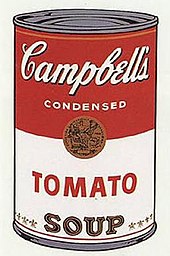
For example, Andy Warhol created a number of pieces of art, such as a drawing of a Campbell's Soup can, and an artistic film about a man receiving a blow job (Literally, the film is called Blow Job, and showcases a man's face as he receives fellatio). These pieces are not in themselves remarkable in any way, but because they are Warhol works, they are regarded as artistic masterpiece.

Warhol Soup Can
Art also facilitates rhetoric through discussion of the art as well. The word choices people use to describe their interpretations of art are all choices of rhetoric that help convey their feelings created by the Pathos enabled by their art. In fact, art is general can be argued to be purely rhetorical in nature.

Friday, February 17, 2012

Linsanity!


Anybody who has been on the internet during the past two weeks has probably been bombarded by articles upon articles about the athlete who overcame all the odds to rise to the top of his game. Well, you can thank Jeremy Lin for that, as his performance in the past seven New York Knicks basketball games has inspired a legion of supporters worldwide, in a phenomenon that can only be described as Linsanity.

But why has Jeremy Lin suddenly taken the world by storm, while other basketball players who perform similarly (Lebron James, Kobe Bryant, etc.) aren't making as large waves? Well, the answer lies in the pathos of Lin's story.

The underdog story is one of the most loved sports storylines. However, many of these seem like movie fiction, only possible through the mastery of writers. Lin is the real life personification of one of these movies. Lightly regarded in high school, Lin was not recruited by any major NCAA basketball programs. Eventually he landed at Harvard, who is not known for their basketball program. After a stellar career at the University, Lin moved on to the NBA.

However, when the NBA draft ended, Lin still did not have a team. In fact, Lin hadn't had a steady contract for the past two years, being shipped from team to team, being given no chance. Earlier this year, he was cut by two teams before landing with the Knicks. Even then, he saw little playing time, and was to be relegated to the D League (minor league basketball) to further develop his skills.

But then, a string of injuries forced Lin into a starting role, where he suddenly excelled, scoring more than 20 points in each of his first six games. Suddenly, the young man who lived on his brother's couch, was an NBA superstar. Now, Lin has a guaranteed contract, a starting position for the Knicks, an apartment in Trump Towers, and international fame.

This story is the type of feel good story of perseverance that people love to hear about. It makes them happy and feel that anything is possible if they work hard enough. Media outlets realize that fans are attracted to the Pathos of the story and know that if they keep printing stories about Lin, readers will keep focusing on the stories, as it makes them feel good.

If Jeremy Lin was a highly recruited star who played at the best basketball school and was drafted first in the NBA draft, nobody would care. That storyline is expected, and doesn't have the emotional edge that Lin's story does. It's not Lin that people like, it's the Pathos he presents that people are attracted to. The same thing happened to Tom Brady at first too. But if Lin is as good as advertised, Linsanity will soon die out as fans will look for the next emotionally attaching story.

Friday, February 10, 2012

TV Commercials and Doctors

Anyone who has watched a television commercial has probably seen an add for some weight loss drug that will "miraculously" help someone lose weight fast. There are numerous ways that these commercials will attempt to prove to the viewer that their product is the real deal. Many use side by side photos to inform the viewer that they could be ripped by using the product.

However, the weight loss advertisement that has always aught my eye is for Hydroxycut. Sure, it's just another commercial, but this one feel different. This one has an actual doctor recommending its use.


Of course, this doesn't make me actually want to use the product, but it made me realize that someone might, just because a doctor is recommending it. The producers of this commercial are using the rhetorical technique of Ethos by featuring a person of a well-respected profession. Viewers are more likely to invest in a product if a person they respect also uses the product.

Just because a well respected person does recommend something, doesn't mean that the product is by any means better. However, it is programmed into the human mind that these spokespeople are trustworthy. But really, that isn't the case at all. Just because a person is paid to sponsor something doesn't mean it is good for you in any way.

To prove that point, here's another product that was "doctor recommended."

Friday, February 3, 2012

How to lose a Florida Primary

On Tuesday, January 31, Republican voters in the state of Florida turned out to cast their votes in the state's primary. Mitt Romney won with 46 percent of votes, beating runner up Newt Gingrich by a staggering 15 percent. Prior to this vote, Gingrich was considered the frontrunner, before a quick collapse gave Romney the victory.

This collapse could be attributed not only to Gingrich's lack of morals, but also due to his rhetorical choices in the days prior.

The most obvious mistake Gingrich made were the ill-advised "moon colony" plans. These plans were a response to the exigence of a loss of jobs in Florida when President Obama shut down the National Space Program. Vocalizing this idea kind of makes sense. What would be a better promise to thousands of former technicians than to restart the space program?

Of course, Gingrich failed to take a few things into account. The first was the size of his rhetorical audience. According to some reports, these plans were a hit amongst Gingrich's rhetorical audience. However, these thousands of people that Gingrich is appealing to isn't nearly the entire state of Florida, and while he did attempt to appeal to other demographics, it wasn't enough to win.

Looking forward, this primary election was not the right time to bring up this "moon colony." There is a term for the right opportune moment, called Kairos. While Florida was an opportune moment and place to bring up his plans short term, it was not an opportune time or place for the rest of the primary.

The "moon colony" was only meant to appeal to Florida voters, but national focus revealed these plans to voters around the nation. Instead of buying into these ideas, people have regarded Gingrich as being crazy. It's also an especially bad time to propose a program that would cost taxpayers billions of dollars. With the state the American economy is in, it is not a good time to bring up additional spending.

This is likely to work against Gingrich's campaign, as the media has a tendency to remind viewers of goof ups such as this one (Dean Scream anybody?), which will most likely deter voters even more. So, due to Newt's poor rhetorical choices, his election bid is looking to be in doubt.

Seriously though,,, That moon colony idea is almost as dumb as Reagan's Strategic Defense Initiative, AKA Star Wars.

Wednesday, February 1, 2012

I Believe in Penn State Football


In November 2011, one hundred thousand fans gathered at Beaver Stadium to watch a football game against the Nebraska Cornhuskers. This, however, was no ordinary game. This game was being played on the heels of sexual assault allegations that rocked the Penn State community, and resulted in criminal charges against school officials, and the firing of coach Joe Paterno. On this day, the community came together to not only watch football, but also forget the feelings of pain and betrayal, and have the emotional toll of the week lifted, even if for only a few hours.  
Football, unlike anything else, brings people together, and not just once either. Week after week, millions join one another in supporting, with all their heart, a few dozen athletes. Being part of such a community is a blessing to me, as I can unite with so many others, many whom I wouldn’t associate with otherwise. At football games, it doesn’t matter if I’ve known a person for years or minutes, I will befriend them, knowing we share a common emotional bond.
On this day, the bonds were bound together tighter than ever. Before the game began, Beaver Stadium, famous for hosting one of the loudest and rowdiest fan bases, transformed into the quietest, as everyone, fans and players alike, took a moment to mourn and reflect. However, once the game commenced, we cheered louder than ever. It was the first time in what seemed like forever that we could immerse ourselves in competition and joy. At this point, we wanted a win… something good that we could take away from this appalling situation.
             But, this was not our game to win, and as time expired, the final score 17-14, Nebraska, we gave the team a standing ovation in appreciation for providing such a critical escape. In mere moments, the weight of the real world crashed upon our heads. Some exhausted fans sobbed, with friends right their to support them.
            The community of football is so important emotionally. As a fan, you know others will be there help you cope and move forward, whether your team loses, or you face a scandal as crippling as we did at Penn State. For some, myself included, this makes football all the more appealing.
That game, despite being a loss, helped prove to the fans that if we stick together, we can push onward, and eventually overcome this pain.

Friday, January 27, 2012

Honoring Joe

In the past week, we've all heard or read numerous accounts of the legacy of Joe Paterno. It is obvious that he was adored by the Penn State community for all that provided for us. Now, sure the rhetoric of these speeches reveal Joe's importance in our community, but it was a different form of rhetoric, visual rhetoric, that made a lasting impression on me.

On tuesday, the viewing for Paterno was held at the spiritual center on campus for a majority of the day. Walking back from my International Relations class, I travel past the spiritual center along Curtain Road. It was here I first saw the line of students and alumni waiting to pay their respects. As I continued down my path, I was astonished to still see a line that extended into what seemed like eternity. Finally, the line ended at the Creamery, a good half mile away.


Later that night, at the library, I noticed two cardboard cutouts of coach Paterno. These cutouts were covered in Post-It notes thanking him for everything has done. Hundreds upon hundreds of these convered every portion of the cardboard cutouts. There were so many, that the cutouts eventually had to be replaced. Soon, these cutouts were covered with notes, and were replaced with even more.

When I left the library, the night sky seemed brighter than usual. Looking up, once would notice a vast beam of light emitting from the direction of Beaver Stadium. Every night since Joe's death, the stadium lights have been on, as if to say, "Joe, you're light may have burned out, but what you've built will always shine on."


When people talk about how Joe made a difference in so many people's lives, we believe it. But words do absolutely no justice. Seeing thousands, many of whom traveled hundreds of miles back to campus, to pay final respects truly showed me for the first time Joe's impact on the world. Even now I have trouble describing the awe I feel. The only thing I can say is that words are not enough to describe it.

Without verbal rhetoric, I would've taken all the praises as the truth, and would've known the partial truth. The visual rhetoric, however, is the only way to reveal the full impact of Joe's impact on the world.

Thursday, January 19, 2012

SOPA and PIPA vs. The World


It is likely that anybody who used the Internet on January 18th found they were unable to access numerous websites, most notably Wikipedia, which “blacked out” in protest of proposed legislation being pushed through both houses of Congress.

These bills, the Stop Online Piracy Act (SOPA) and the Protect IP Act (PIPA) are intended to protect the copyrights of corporate companies from Internet piracy. However, the bill has received strong opposition from citizens, claiming that the bills border on censorship and infringe upon the first amendment right of free speech.

This may lead one to wonder what the bills would actually do that could possibly be that detrimental to the freedom of Americans. SOPA and PIPA would give the Justice Department the ability to block access and funding to any site that “enables or facilitates” copyright infringement. This is aimed at non-American websites, but also leaves the possibility of shutting down American websites as well.

This may seem like a logical thing to do, after all, piracy is a problem. And what better way to eliminate the problem than by removing access to it completely? The argument above indicates how word-choice can appeal to the logos of citizens and make SOPA and PIPA an appealing tool.

However, opponents of the bill point out that the wording of SOPA and PIPA are so vague, that it could lead to uncertainty of the fates of sites like YouTube. How could this be? Well, YouTube allows its members to upload their own content onto the site. If the content in a video contains copyrighted material, then the government would have the right under SOPA and PIPA to block access and advertising to YouTube. This is unlikely, as YouTube is an internet staple, though it could easily destroy an upcoming company before it can become successful.

Opposing arguments to SOPA and PIPA also use numerous rhetorical choices to make its point. First, the arguments appeal to the pathos and ethos of citizens. They appeal to pathos by enraging citizens by informing them that the government is attempting to spread its power beyond its means, an issue that has been a hot button topic as of late. Also, this is done by comparing America to places that have media censorship, like China.

They appeal to ethos by asking citizens if it is morally right for the government to take away a forum for expression just because a company doesn’t want to lose money. In these hard economic times, “exposing” greed is one of the easiest ways to destroy the moral image of a person (or thing), which is exactly what has occurred to SOPA and PIPA.

To continue the protests, websites that shut down encouraged citizens to call their representatives and tell them to vote “no” on both acts. Somewhat surprisingly, many members of Congress valued the opinions of the citizens in this debate, and have decided to vote no on both SOPA and PIPA.

This highlights a major point of rhetorical thinking in debate. In Greek and Roman debates, opinion was held in high regard during arguments. This has dwindled over the years, and opinion is rarely accepted as a valid argument (as compared to facts). However, opponents of the bill do not have factual evidence that the bills will cause citizens rights to be impeded upon. Rather, it is their opinion that the government will abuse their power if the bills are passed. By listening to the opponents, and voting against the bills, many in Congress are approaching the SOPA debate in a manner that better resembles the thinking of the Greeks and Romans.

Friday, January 13, 2012

Welcome

This is Mat Robida's blog, Rhetoric and Civic Life. In this blog, I will be discussing topics learned in my LA 101H course.